Key Takeaways
- The RPKM paired with the M4A1 provides a versatile loadout, excelling in dynamic mid-range engagements and adaptable to evolving sightlines on Big Maps. This combination allows for sustained suppressive fire from the RPKM, with the M4A1 offering faster target acquisition for unexpected threats or aggressive pushes.
- Combining the RPKM with the SGX creates a formidable close-quarters and mid-range setup, ideal for navigating destroyed environments and controlling objectives. The SGX compensates for the RPKM's slower handling in tight spaces, enabling swift transitions between holding lanes and clearing interiors, crucial for squad synergy.
- The RPKM and M87A1 pairing offers extreme versatility across varied engagement distances, particularly effective in areas impacted by levolution events. The M87A1 delivers decisive close-range stopping power, allowing the RPKM to maintain suppressive fire at medium ranges, effectively covering team advances or defending key positions.
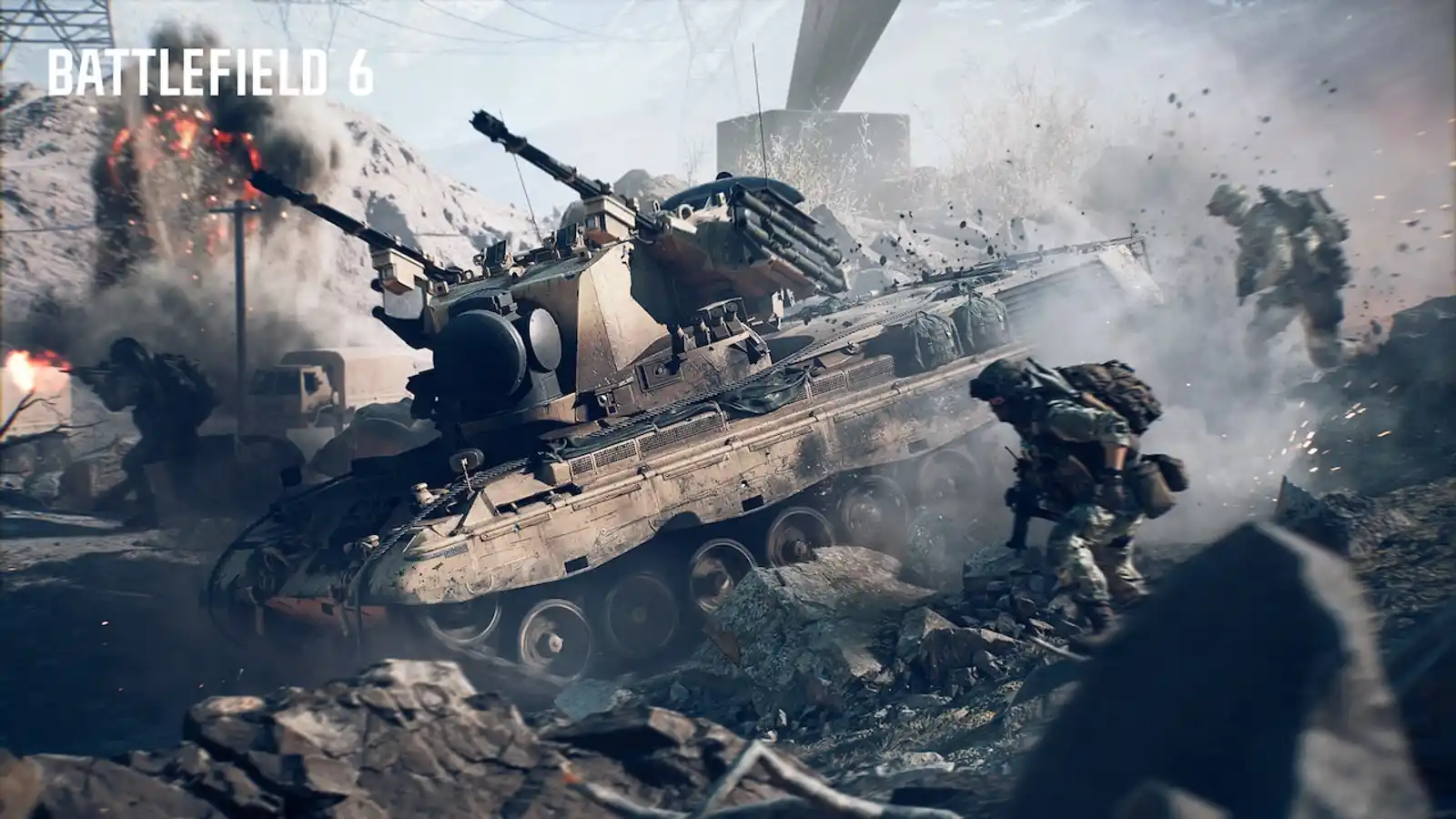
In Battlefield 6, the RPKM light machine gun holds a significant position within the current weapon meta, recognized for its substantial suppressive capabilities and sustained fire potential. However, its true effectiveness on the sprawling Big Maps is unlocked not by its individual power, but by strategic weapon pairing. The vast, dynamic environments of Battlefield 6, characterized by extensive destruction, unpredictable levolution events, and constantly shifting adaptive sightlines, demand a versatile approach to combat. Proper weapon pairing is crucial for the RPKM, allowing players to cover its inherent limitations while amplifying its strengths across diverse engagement distances and tactical scenarios. This article will guide players through optimal weapon combinations, detailing how to leverage squad synergy and adapt to the ever-changing battlefield. Readers will learn to select secondary weapons that not only complement the RPKM's role but also provide critical advantages in close-quarters combat or rapid repositioning, ensuring dominance in every firefight.
Overview of the RPKM
The RPKM, a light machine gun, serves as a foundational weapon in Battlefield 6's current meta, particularly effective on Big Maps due to its role as an original Light Support Weapon. It is best suited for mid-range suppressive fire, capable of delivering sustained damage and controlling lanes. Its strengths lie in its large magazine capacity, allowing for prolonged engagements without frequent reloads, and its ability to suppress enemy positions, impacting their accuracy and movement. This makes it invaluable for supporting squad pushes or holding defensive lines, contributing significantly to squad synergy. The RPKM's suppressive fire can effectively pin down enemies, enabling teammates to reposition or advance through evolving adaptive sightlines created by destruction.
However, the RPKM's inherent weaknesses include slower mobility, reduced aim-down-sight (ADS) speed, and a more challenging recoil pattern during rapid, sustained fire. These limitations make it less ideal for close-quarters combat or rapid, reactive engagements. Specific weapon pairings are essential to mitigate these drawbacks. By complementing the RPKM with a weapon optimized for different engagement profiles, players can maintain effectiveness across the full spectrum of combat scenarios found on Big Maps, including those impacted by levolution events. This strategic approach enhances overall performance, ensuring the RPKM remains a viable and powerful asset.
Best Guns to use with the RPKM
The following recommended weapons have been carefully selected to specifically complement the RPKM's strengths and address its limitations. Each pairing offers distinct tactical advantages, enhancing the RPKM's performance across varied combat scenarios. These combinations aim to provide versatility, ensuring players are equipped for both sustained suppressive fire and agile close-quarters engagements, crucial for adapting to Battlefield 6's dynamic Big Maps.
#1 M4A1
The M4A1, an assault rifle known for its high cyclic rate, forms a highly effective pairing with the RPKM, creating a versatile loadout for Battlefield 6's Big Maps. While the RPKM excels at mid-range suppression and sustained fire, the M4A1 complements it by offering superior handling, faster aim-down-sight (ADS) time, and improved mobility, making it ideal for more dynamic engagements. This synergy allows players to maintain suppressive pressure with the RPKM, then quickly switch to the M4A1 for aggressive pushes, clearing objectives, or reacting to close-range threats that emerge from destruction.
Tactical advantages include the ability to quickly adapt to evolving adaptive sightlines. When RPKM suppression creates an opening, the M4A1 can capitalize with its faster sprint-to-fire time. During levolution events that alter map layouts and create new engagement distances, this pairing ensures readiness for both open-field and tighter, newly formed combat zones. For a recommended loadout, the RPKM benefits from attachments that enhance recoil control and bullet velocity for consistent mid-range accuracy, such as a heavy barrel and a vertical foregrip. The M4A1 should be equipped for improved recoil management and faster ADS, utilizing a compensator and a lightweight stock. This combination optimizes both weapons for their respective roles, contributing to strong squad synergy by allowing a player to effectively cover multiple threat vectors.
Potential limitations include the M4A1's requirement for competent recoil management, especially when extending its effective range. While versatile, neither weapon is a dedicated long-range sniper, meaning extreme distances might still pose a challenge. However, for the majority of engagements on Big Maps, this pairing offers a balanced and potent solution.
#2 SGX
The SGX, a modern 9.19mm PDW classified as an SMG, provides an excellent close-range counterpoint to the RPKM's mid-range suppressive capabilities, creating a highly adaptable loadout for Battlefield 6's Big Maps. The RPKM's strengths in sustained fire and area denial are perfectly complemented by the SGX's exceptional mobility, high rate of fire, and superior close-quarters time-to-kill (TTK). This pairing allows players to dominate both open lanes with the RPKM and tight interiors or flank routes with the SGX, crucial for navigating environments shaped by destruction.
The synergy benefits are evident in rapid transitions between engagement distances. When an enemy pushes through a destroyed wall or a levolution event opens a new pathway, the SGX ensures immediate lethality up close, where the RPKM would be cumbersome. This enhances squad synergy by allowing a player to effectively clear buildings for advancing teammates or defend a contested objective from multiple angles. For a recommended loadout, the RPKM should be configured to maximize its suppressive capabilities with a large magazine and a bipod for stability. The SGX benefits from attachments that improve its close-range effectiveness, such as an extended magazine for sustained fire in tight spaces and a laser sight for hip-fire accuracy. It can also be configured with a suppressor for stealthy flanking maneuvers.
Potential limitations include the SGX's limited effective range; while it can be configured for improved ranged capabilities, it will not match the RPKM's mid-range precision. This pairing requires players to be conscious of engagement distances and to switch weapons proactively. However, for aggressive playstyles that prioritize objective control and adapting to dynamic adaptive sightlines, the RPKM-SGX combination offers formidable versatility and power.
#3 M87A1
The M87A1, a reliable pump-action shotgun, offers a devastating close-quarters solution that perfectly complements the RPKM's mid-range suppressive fire, creating a highly specialized yet effective pairing for Battlefield 6's Big Maps. While the RPKM provides sustained fire and area denial at medium distances, the M87A1 delivers unparalleled stopping power in tight spaces, effectively covering the LMG's primary weakness in extreme close-range engagements. This combination allows players to maintain control of open lanes with the RPKM, then swiftly transition to the M87A1 for clearing buildings, defending chokepoints, or reacting to enemies pushing through destroyed cover.
The synergy benefits are particularly pronounced in dynamic combat scenarios and areas impacted by destruction or levolution events. When a structure collapses, opening new close-quarter pathways, the M87A1 becomes an invaluable tool for securing the immediate vicinity, while the RPKM can provide covering fire from a distance. This pairing significantly enhances squad synergy by allowing a single player to effectively control multiple threat ranges, acting as both a suppressive fire platform and a close-quarters threat. For a recommended loadout, the RPKM should be equipped to maximize its mid-range accuracy and suppression, using a heavy barrel and an optical sight suitable for target acquisition at range. The M87A1 benefits from attachments that enhance its pellet spread and reload speed, such as a choke and a speed loader, ensuring maximum lethality and readiness in close encounters.
Potential limitations include the M87A1's extremely limited effective range, making it almost useless beyond short distances. Players relying on this pairing must be highly aware of their positioning and actively seek close-quarters engagements when the M87A1 is equipped. However, for players who master weapon switching and leverage the M87A1's strengths in specific scenarios, this pairing provides a decisive advantage in controlling objectives and adapting to the constantly changing adaptive sightlines on Big Maps.
Tactical Usage Tips
Effectively utilizing RPKM weapon combinations on Battlefield 6 Big Maps requires strategic weapon switching and an understanding of engagement distances. When holding a lane with the RPKM, maintain suppressive fire to pin enemies down, contributing to squad synergy. If an enemy pushes aggressively or enters a building, swiftly switch to the M4A1 for faster target acquisition and mobility in mid-range encounters, or the SGX/M87A1 for immediate close-quarters lethality. This rapid transition is crucial for adapting to evolving adaptive sightlines and environments shaped by destruction or levolution events.
Maximize synergy by using the RPKM's suppression to create opportunities for teammates, or to allow personal repositioning. For instance, after laying down RPKM fire, switch to the M4A1 to push a weakened enemy position. When traversing tight spaces or clearing objectives, lead with the SGX or M87A1 to capitalize on their close-range dominance. The RPKM can then be used to cover exits or suppress incoming reinforcements. Always consider the current combat situation and the immediate threat. Practicing smooth weapon swaps and understanding each weapon's optimal range will significantly enhance gameplay and ensure readiness for any encounter on the dynamic Battlefield 6. Coordinate with your squad to cover each other's weaknesses and amplify strengths.
Conclusion
Mastering weapon pairings with the RPKM is essential for dominance on Battlefield 6 Big Maps. The M4A1 offers a versatile combination, balancing mid-range suppression with agile assault capabilities, ideal for dynamic engagements and adapting to adaptive sightlines. The SGX provides superior close-quarters lethality, effectively covering the RPKM's limitations in tight spaces and excelling in areas impacted by destruction. For extreme close-range dominance, the M87A1 shotgun delivers unmatched stopping power, particularly effective during levolution events that create new close-quarter combat zones.
Each pairing caters to different playstyles: the M4A1 for balanced aggression, the SGX for fast-paced objective play, and the M87A1 for decisive close-range encounters. The importance of strategic weapon combinations cannot be overstated in Battlefield 6's ever-changing environments. Players are encouraged to experiment with these suggested pairings, discover which best suits their individual preferences, and adapt their loadouts to maximize squad synergy and overall effectiveness on the battlefield.