Key Takeaways
- The L85A3 assault rifle complements the KTS100 MK8 by providing reliable mid-range damage, ideal for engaging targets after suppressing with the LMG or when repositioning across open areas. It excels in holding adaptive sightlines created by environmental destruction.
- The SGX SMG offers crucial close-quarters combat capability, covering the KTS100 MK8's slower handling in tight spaces. This pairing is optimal for clearing interiors or pushing through choke points after levolution events, maintaining squad synergy in close engagements.
- The DRS-IAR LMG serves as a heavy-hitting alternative, enhancing the KTS100 MK8's suppressive fire and sustained damage output. This combination is effective for locking down lanes, denying enemy pushes, and maintaining pressure during objective captures, especially when destruction creates new firing angles.
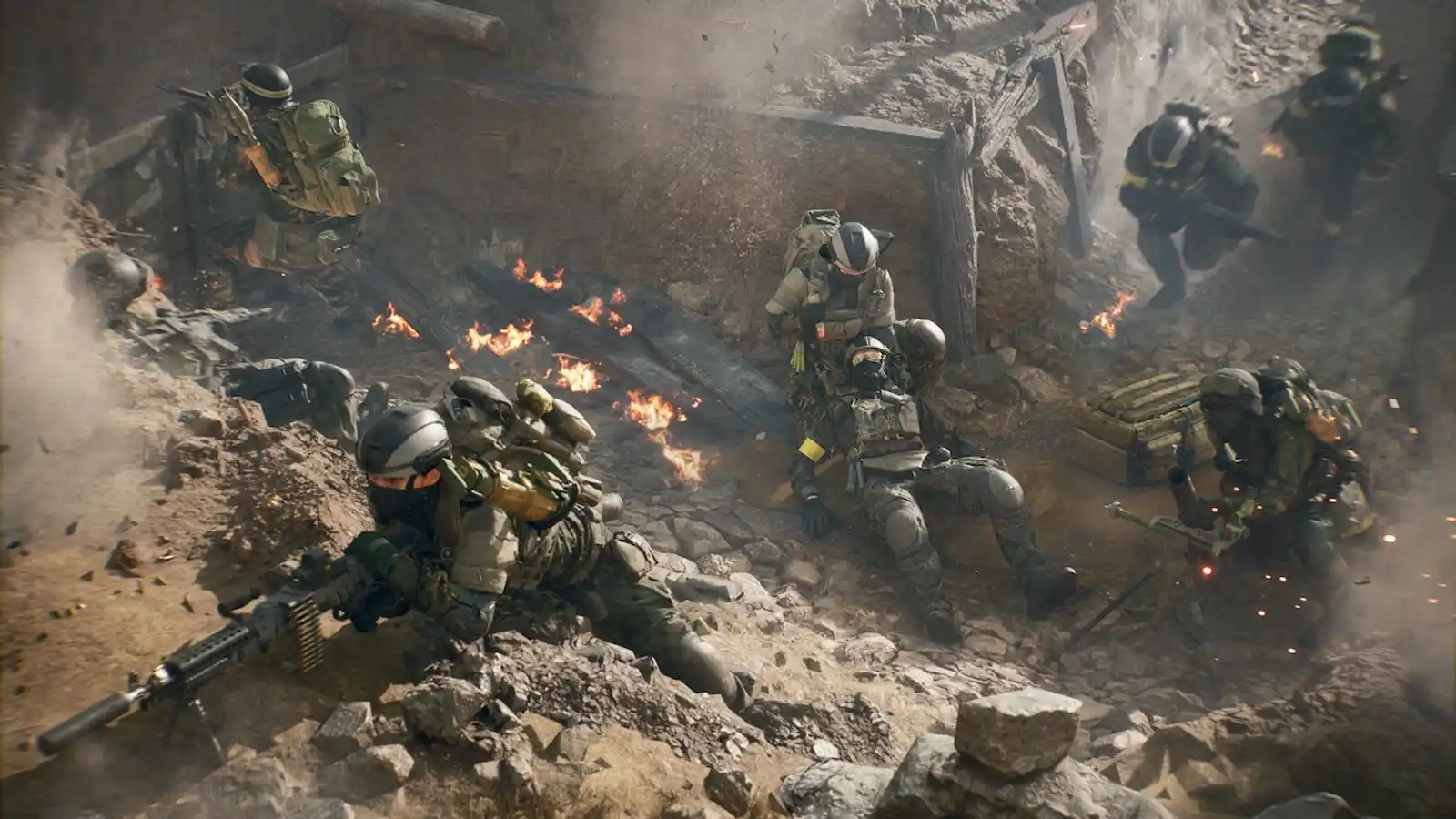
The KTS100 MK8 light machine gun holds a notable position in the current Battlefield 6 Big Maps meta for Season 2, recognized for its consistent performance in sustained fire engagements. While its low recoil and steady rate of fire make it a formidable weapon for suppression and area denial, its inherent limitations in mobility and close-quarters handling necessitate strategic weapon pairings.
Proper secondary weapon selection is crucial to cover these weaknesses and amplify the KTS100 MK8's strengths, ensuring adaptability across the diverse combat scenarios found in Big Maps. This article details optimal loadout combinations, providing players with the strategic advantages needed to dominate the battlefield. Readers will learn how specific weapon pairings enhance overall combat effectiveness, allowing for seamless transitions between long-range suppression and immediate close-quarters threats. Understanding these synergies is key to mastering Battlefield 6's dynamic engagements, where destruction and adaptive sightlines constantly reshape the flow of battle.
Overview of the KTS100 MK8
The KTS100 MK8 is a light machine gun characterized by low recoil and a steady rate of fire, positioning it as a reliable option for sustained suppressive fire in Battlefield 6 Big Maps. Its moderate damage output is offset by high accuracy, making it effective for maintaining pressure on enemy positions and controlling lanes at medium to long ranges. The weapon's primary strength lies in its ability to deliver consistent fire with minimal aim deviation, contributing significantly to squad synergy by suppressing opponents and enabling teammates to push or reposition.
However, the KTS100 MK8's LMG classification means it inherently suffers from lower mobility and slower aim-down-sight times compared to other weapon types. This can leave operators vulnerable in rapid close-quarters engagements or when needing to quickly adapt to new sightlines created by destruction. Specific weapon pairings are essential to enhance the KTS100 MK8's performance by compensating for these limitations. By selecting a secondary weapon optimized for different engagement distances or faster handling, players can cover the LMG's weaknesses, allowing for versatile combat effectiveness across all Big Map scenarios, including those influenced by levolution events.
Best Guns to use with the KTS100 MK8
The following weapon recommendations have been carefully selected to complement the KTS100 MK8's performance profile. Each pairing addresses specific limitations of the primary LMG, such as close-range effectiveness or rapid target acquisition. These combinations enhance the KTS100 MK8's strengths by providing versatility across engagement distances and adapting to the dynamic environmental changes prevalent in Battlefield 6 Big Maps.
#1 L85A3
The L85A3, an assault rifle known for its steady rate of fire and effectiveness in mid to long-range engagements, forms a highly synergistic pairing with the KTS100 MK8. While the KTS100 MK8 provides accurate suppressive fire and sustained damage at range, the L85A3 offers quicker aim-down-sight (ADS) time and superior mobility, allowing for more agile repositioning and faster target acquisition when the LMG's handling becomes a hindrance.
This pairing creates tactical advantages by enabling seamless transitions between area denial with the KTS100 MK8 and precise, mobile engagements with the L85A3. For instance, after using the KTS100 MK8 to suppress a fortified position, the L85A3 can be rapidly deployed to clear the area or engage enemies attempting to flank through newly created destruction paths. The L85A3's versatility makes it ideal for holding adaptive sightlines that frequently emerge or disappear due to levolution events, providing a reliable primary fire option when the KTS100 MK8's sustained fire is not optimal.
A recommended loadout for the KTS100 MK8 includes a 3x optic, an extended magazine for prolonged suppression, and a bipod for enhanced stability. The L85A3 should be equipped with a quick ADS grip, a compensator for recoil control, and a 1.5x or 2x optic for versatile mid-range engagements. This combination excels in scenarios involving lane control, defending objectives with varied engagement distances, and adapting to the dynamic battlefield where squad synergy is crucial. A potential limitation of this pairing is that while the L85A3 is more mobile than the KTS100 MK8, neither weapon is optimized for extreme close-quarters combat, which might leave players vulnerable in very tight interior spaces against dedicated SMG users.
#2 SGX
The SGX SMG, a modern 9.19mm PDW optimized for close-range engagements, provides an excellent counterpoint to the KTS100 MK8's strengths and weaknesses. The KTS100 MK8 excels in sustained suppressive fire and controlling lanes at medium to long distances, but its slower handling and mobility can be a significant disadvantage in tight, fast-paced environments. The SGX directly addresses these limitations with its high fire rate, superior mobility, and rapid aim-down-sight (ADS) time, making it devastating in close-quarters combat (CQC).
This pairing creates a versatile loadout, allowing players to dominate both open areas with the LMG and confined spaces with the SMG. The synergy is particularly effective when navigating areas impacted by destruction, where new entry points and close-range encounters become frequent. For example, after using the KTS100 MK8 to suppress enemies across a street, a player can quickly switch to the SGX to clear a building or push through a collapsed wall, maintaining offensive momentum and contributing to squad synergy. The SGX's effectiveness in CQC also makes it ideal for reacting to unexpected enemy pushes during levolution events that alter traversal lanes.
A recommended loadout for the KTS100 MK8 includes a 3x optic for range, an extended magazine, and a heavy barrel for improved bullet velocity. The SGX should be configured for maximum close-range performance, with a laser sight for hip-fire accuracy, a quick ADS stock, and an extended mag. This combination excels in objective play, urban combat, and scenarios requiring rapid adaptation between different engagement distances. A potential limitation is the SGX's reduced effectiveness at longer ranges, meaning players must rely heavily on the KTS100 MK8 for any engagement beyond 20-30 meters.
#3 DRS-IAR
The DRS-IAR, a reliable light support weapon (LSW) that blurs the lines with service rifles, offers a complementary pairing with the KTS100 MK8 by enhancing sustained fire capabilities and providing a versatile alternative for medium-range engagements. While both are LMG-type weapons, the DRS-IAR's adaptability through attachments allows it to function with greater mobility and precision than the KTS100 MK8 in certain scenarios, particularly when configured for a more aggressive playstyle.
The KTS100 MK8 provides consistent suppressive fire and area denial, while the DRS-IAR can be equipped to offer a more mobile LMG experience, allowing players to push or hold positions more dynamically. This synergy is particularly potent in Big Maps where sustained fire is crucial for lane control and denying enemy advances, especially in areas prone to destruction. For instance, the KTS100 MK8 can be used to lay down heavy suppressive fire on a choke point, while the DRS-IAR, with a more balanced loadout, can be used to push through or hold a newly opened adaptive sightline created by environmental destruction. This pairing significantly boosts a squad's ability to maintain pressure and control territory, enhancing overall squad synergy. During levolution events, the DRS-IAR's versatility allows for quicker adaptation to changed landscapes compared to the more static KTS100 MK8.
A recommended loadout for the KTS100 MK8 includes a 3x optic, an extended magazine, and a bipod for maximum stability during sustained fire. The DRS-IAR, when paired, could benefit from a 2x optic, a vertical grip for improved recoil control, and a lighter stock for enhanced mobility. This combination excels in scenarios requiring heavy suppression, defensive holds, and coordinated team pushes. A potential limitation is the overall reduced mobility when carrying two LMG-class weapons, which can make rapid repositioning challenging in dynamic firefights.
Tactical Usage Tips
Effectively utilizing the KTS100 MK8's weapon combinations requires strategic awareness and quick decision-making. For engagements at medium to long ranges, the KTS100 MK8 serves as the primary tool for suppression and sustained fire. When enemies close the distance or new close-quarters threats emerge, a swift weapon switch to the SGX is critical. This allows for immediate adaptation to the changed engagement distance, maximizing time-to-kill in tight spaces.
For mid-range versatility and rapid repositioning, the L85A3 offers a balanced alternative. Players should practice quick-scoping with the L85A3 after laying down suppression with the KTS100 MK8 to capitalize on adaptive sightlines created by destruction. When facing heavy resistance or needing to maintain overwhelming suppressive fire, the DRS-IAR pairing allows for continuous pressure, rotating between the two LMGs to manage reloads and sustain fire. Maximizing synergy involves understanding each weapon's optimal range and switching proactively rather than reactively. Anticipate enemy movements and the impact of levolution events to always have the most appropriate weapon ready, ensuring consistent contribution to squad synergy.
Conclusion
The KTS100 MK8, while a powerful LMG for sustained fire and suppression in Battlefield 6 Big Maps, truly shines when paired with complementary weapons. The L85A3 offers balanced mid-range combat and mobility, ideal for players who value versatility and quick adaptation to changing sightlines. The SGX SMG provides crucial close-quarters dominance, perfect for aggressive players who push objectives and navigate destruction-heavy environments. For those who prioritize overwhelming suppressive fire and sustained lane control, the DRS-IAR LMG amplifies the KTS100 MK8's strengths.
Strategic weapon combinations are paramount for success in Battlefield 6's dynamic battlefields, where levolution and squad synergy dictate the flow of combat. Players are encouraged to experiment with these suggested pairings to discover which combination best suits their individual playstyle and tactical preferences, ultimately enhancing their overall effectiveness on the Big Maps.